If it feels like respect is harder to find these days—at work, in our communities, and in everyday interactions—you are not imagining it.
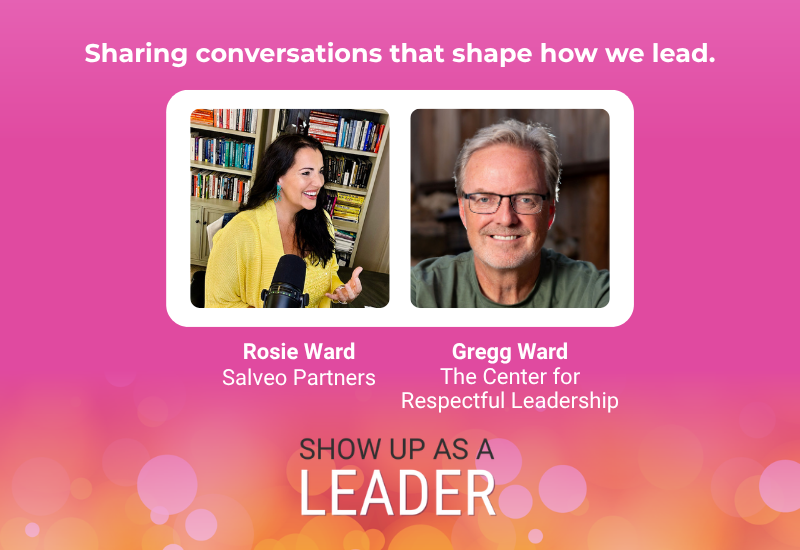
In a recent episode of my Show Up as a Leader podcast, I sat down with Gregg Ward, founder and executive director of The Center for Respectful Leadership, to talk about something that on the surface may sound like common sense—but in practice is deeply challenging and urgently needed: respect.
Gregg and I explored why respect has eroded so visibly in today’s workplace, what respectful leadership actually looks like in action, and how leaders can begin rebuilding cultures where people feel seen, heard, and valued again.
Why Respect Is a Leadership Imperative Right Now
Gregg shared research showing that public disrespect is at levels we have not seen since the height of the Vietnam War. Add chronic stress, constant change, and a permanent state of “crisis mode,” and it becomes clear why respectful behavior is often the first thing to disappear.
One of the most important reminders from our conversation is this: Respect is not a thought—it is a feeling.
We do not say, “I think I’m being respected.” We say, “I feel respected.”
That distinction matters. When people feel respected, they are more engaged, collaborative, and willing to contribute. When they feel disrespected, their nervous systems go into protection mode—and leadership effectiveness erodes quickly.
Gregg’s Unconventional Path to Respectful Leadership
Gregg’s passion for this work comes from an unexpected place. His background is in theater, where he learned early on that you cannot move people by logic alone—you have to reach them emotionally.
That insight led him to groundbreaking work with the New York City Police Department, using live theater and improvisation to train officers in high-stakes, emotionally charged situations. What became clear, very quickly, was that mutual respect can de-escalate conflict faster than authority ever will.
From there, Gregg brought these lessons into corporate and organizational settings, helping leaders understand how respect—or the absence of it—shapes culture, trust, and performance.

What an Actively Respectful Culture Really Requires
A respectful culture does not mean everyone agrees or even likes one another. It means people are willing to acknowledge each other’s humanity.
Gregg emphasized several foundational truths:
- You do not have to like someone to work well with them—but you do have to respect them.
- Respect often comes from recognizing others’ knowledge, experience, and how they treat people.
- Younger generations are not “too sensitive”—they are simply less willing to tolerate environments where dignity is optional.
Respect becomes the glue that holds collaboration, engagement, and resilience together—especially in times of uncertainty.
Practical Ways Leaders Can Rebuild Respect
This is not about grand initiatives or expensive programs. Respectful leadership is built through daily, intentional practices:
- Pausing before reacting—especially under stress
- Listening fully and reflecting what you hear
- Naming emotions instead of acting them out
- Addressing disrespect directly and privately
- Recognizing and reinforcing respectful behavior
When leaders model these behaviors, respect becomes reciprocal—and contagious.
The Ripple Effect of Respect
One of the most powerful insights from Gregg’s work is that respect never stays contained.
When employees feel respected internally, they treat clients, customers, and partners with that same dignity. Over time, organizations develop a reputation—not just for what they do, but for how they treat people.
That is leadership impact at scale.
An Exciting New Chapter: Gregg Joins as Podcast Partner
I am also excited to share that Gregg is joining Show Up as a Leader as a podcast partner. Beginning January 28, 2026, he will launch his own monthly podcast, The Better Boss, with new episodes released on the 4th Wednesday of each month.
This partnership reflects our shared commitment to helping leaders build the human skills that matter most—especially when pressure is high and the stakes are real.
I hope you will tune in each month as Gregg shares proven people-management techniques you can put into practice immediately.
Respect may feel like a small thing, but its absence causes significant harm. Rebuilding it starts with awareness, intention, and the courage to lead differently—one interaction at a time.
I invite you to take time to listen to this episode and reflect on how respect shows up in your own leadership.
👉 Find it here or wherever you get your podcasts.
Stay brave. Stay human. Stay safe. And never dull your sparkle!
Rosie
