
Some conversations stay with you because they are full of wisdom.
Others stay with you because they make something you already believe feel even more urgent.
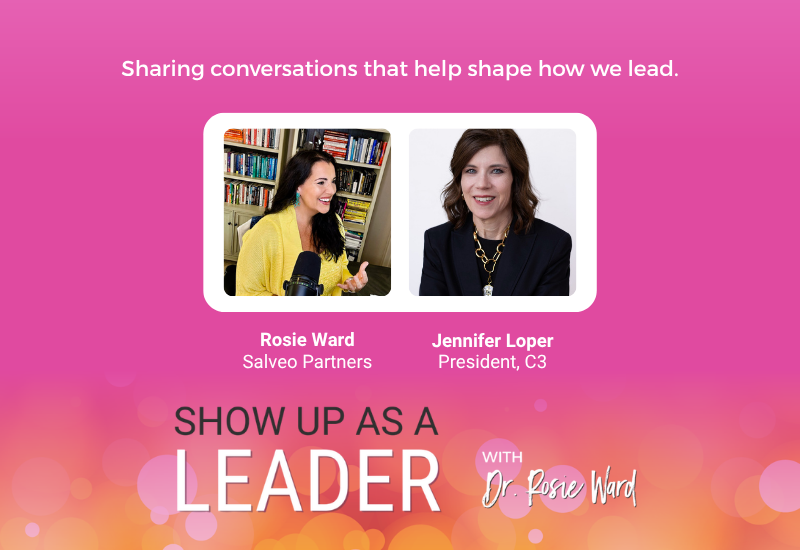
My conversation with Jennifer Loper, President of C3, did both.
Jennifer and I connected over one of my favorite Brené Brown phrases from the Dare to Lead work: Clear is kind. Unclear is unkind.
It’s simple. It’s memorable. And if we actually practice it, it can be life-changing.
But here’s the thing: most people love the idea of “clear is kind” in theory. We nod along. We quote it. We put it on slides. We say we want more honest feedback, more transparency, more accountability, and more courageous conversations.
Then real life happens.
A conversation gets uncomfortable.
Someone might be hurt.
A leader doesn’t want to seem harsh.
A team avoids naming what everyone can see.
And suddenly, in the name of being “nice,” we become vague. We soften the message so much that the truth gets lost. We avoid the conversation entirely and tell ourselves we are protecting the other person.
But are we?
That’s the question Jennifer and I kept circling back to in this conversation: What if withholding clear feedback isn’t kindness at all? What if it’s actually about our own discomfort?
Oof.
Nice Keeps the Peace. Kind Tells the Truth.
One of the most powerful parts of this conversation was Jennifer’s distinction between being nice and being kind.
Nice feels good at the moment. Nice smiles. Nice holds open the door. Nice avoids friction. Nice keeps everything pleasant on the surface.
And to be clear, there is nothing wrong with being nice. We need more basic decency in the world.
But kindness is deeper.
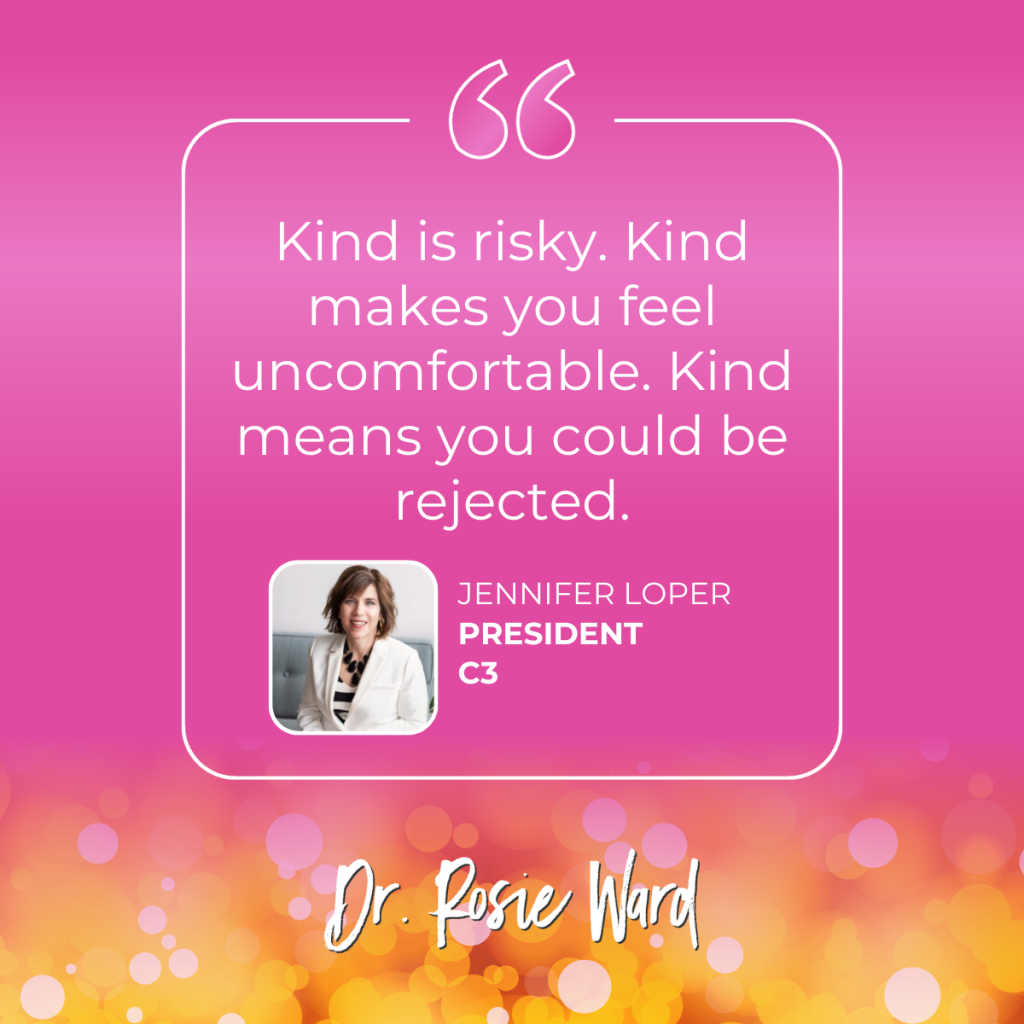
Kindness is more invested. Kindness requires courage. Kindness might feel uncomfortable in the moment because it is willing to risk temporary discomfort in the service of someone’s growth, well-being, or future.
Jennifer shared a deeply personal story about this.
Years ago, when her sister had twins, Jennifer noticed that her niece’s head seemed misshapen. She was not a doctor. She did not know for sure if something was wrong. And she knew raising the concern could upset her sister and brother-in-law.
But she also knew this: if she stayed silent because she was uncomfortable, that silence would be about her.
So she had the hard conversation.
It was painful. Her sister and brother-in-law were upset. Jennifer understood why. But she kept coming back to love and care. She was not trying to be right. She was not trying to control the situation. She was trying to offer information that might matter.
And it did.
Her niece saw a specialist, got the support she needed, and everything turned out fine.
That story is such a powerful example of truth with care. Not brutal honesty. Not dumping our opinions on people. Not weaponizing feedback. But caring enough to say the thing that may be hard to hear because the other person matters more than our comfort.
That is the heart of “clear is kind.”
Feedback Is a Gift—Even When It’s Clumsy
I work with many leaders who struggle with feedback. In fact, our analysis of over 250 leaders across industries found that this is one of the most common areas where leaders want to improve but get stuck.
Some struggle because they don’t want to hurt people’s feelings. They don’t want to deal with emotion. They don’t want someone to be mad at them or think less of them.
Others struggle because they come in too hot. They are righteous, controlling, or so focused on being right that their feedback becomes harsh rather than helpful.
Both camps miss the same target: truth with care.
Truth without care can become brutal.
Care without truth can become avoidance.
But when the two come together, feedback becomes one of the greatest gifts we can give another human.
That does not mean feedback always feels good. It often doesn’t. Growth rarely does at first. But when someone cares enough to help us see something we cannot see, they are giving us an opportunity to get out of our own way.
I often ask leaders to consider this reframe:
Am I robbing this person of an opportunity to grow because I am uncomfortable?
That question changes everything.
If I withhold feedback because I do not want to feel awkward, I am making the conversation about me. I may tell myself I am being kind, but I am actually protecting my own comfort.
And that is not leadership.
Leadership asks more of us.
Stop Serving the Feedback Sandwich
One of the most common ways we avoid clear feedback is by dressing it up in what many of us were taught years ago: start with something positive, slip in the constructive feedback, and end with something positive.
The infamous feedback sandwich.
Or, as I like to call it, the crap sandwich.
Here’s the problem: it usually does not work.
The praise starts to feel manipulative or insincere. The actual feedback gets watered down. The person walks away, unsure whether anything needs to change. And the leader feels like they
delivered the message when, in reality, they may have created more confusion.
Clear is kind. Unclear is unkind.
That does not mean we abandon care. It means we stop hiding the truth inside layers of vague niceness.
A more human way to begin might sound like:
“I care about you and our working relationship, and I have some feedback I think may be helpful. Are you open to hearing it?”
Or:
“This is hard for me to say, and I may be clumsy with it, but you matter too much for me not to have the conversation.”
That kind of vulnerability matters.
When leaders acknowledge their own humanity without making the conversation about themselves, it creates a different kind of space. It invites grace. It signals care. It says, “I’m not here to attack you. I’m here because I believe in your ability to grow.”
That is the kind of feedback culture we need more of.
Feedback Culture Has to Be Operationalized
One of the things I appreciated so much about Jennifer is that she did not keep this conversation theoretical.
At C3, they are working to operationalize feedback.
Not perfectly. No organization does this perfectly. But deliberately.
Jennifer shared several practices that help make feedback part of the culture instead of something reserved for annual reviews or crisis moments.
They have consistent one-on-ones between supervisors and direct reports. They talk openly about giving and receiving feedback in staff meetings. They create space for leaders to receive feedback, not just give it. They use employee engagement surveys to ask whether the organization is actually living up to what it says it values.
And one of my favorite practices: their 90-day review.
Jennifer participates in those conversations, regardless of the person’s role, and asks a powerful question:
Are we delivering on what we said we were?
Think about that.
So many organizations make big promises during the hiring process. We say we are collaborative. We say we are people-first. We say we value feedback. We say we care about culture.
But do people experience that once they are inside the organization?
Jennifer shared that someone once answered honestly, essentially saying, “I’m so glad you asked, because you said C3 works this way, and I’m not seeing that.”
What a gift.
That is exactly the kind of feedback organizations need if they are serious about culture. Because the worst thing we can do is claim to be something and then fail to deliver on it.
Culture is not what we say on the website.
Culture is what people experience.
And if leaders are not willing to ask whether the lived experience matches the promise, they are not leading culture. They are just marketing it.
Leaders Have to Go First
Feedback cultures do not happen because we tell people to speak up.
They happen when leaders model it.
People watch what leaders do far more than they listen to what leaders say. If leaders deflect feedback, punish honesty, avoid accountability, or pretend they have everything figured out, people quickly learn that feedback is not safe.
But when leaders go first; when they own their missteps, ask for input, receive feedback without defensiveness, and acknowledge where they are still learning—they create permission for others to do the same.
Jennifer shared a great example of this in a staff meeting. A colleague had moved a business development opportunity forward after Jennifer, based on past experience, had assumed it would not go anywhere. Instead of brushing past it, she named it. She acknowledged that he succeeded where she likely would not have because her prior experience had clouded her openness.
That is leadership.
Not perfection. Not having all the answers. Not being the smartest person in the room.
Leadership is being willing to say, “I missed that. I learned from this. And I want all of us to keep learning.”
That kind of modeling builds trust.
Relationships Make Truth with Care Possible
Near the end of our conversation, Jennifer offered a challenge to leaders: have real relationships with your colleagues, clients, and candidates. Know the person. Build the relationship.
That may sound simple, but it is everything.
Because you cannot have truth with care if you do not have care.
And you cannot show care if you have not taken the time to know the person in front of you.
This is one of the reasons I love facilitating our proprietary Developing a Leadership Mindset program, the Showing Up and Lifting Up workshops developed by Jen Marr and the Dare to Lead™ program as one of Brené Brown’s Certified Dare to Lead Facilitators. These programs are all about awareness, culture-building and equipping people with shared tools and tangible skills to actively help people feel they matter and leverage truth with care. Because courage and supportive care are not vague aspirations; they are a practiced set of behaviors.
This matters because feedback does not land the same way in every culture.
In a culture where people feel judged, unsafe, disconnected, or unseen, even well-intended feedback can feel like a threat. But in a culture where people experience belonging, trust, gratitude, care, and the freedom to make mistakes, feedback has somewhere healthier to land. It becomes less about criticism and more about connection, growth, and support.
That is the work that is a key part of team-based courage building, one of three pillars essential to future-proofing leadership at your organization. After all, transformation happens within the context of caring relationships. Programs like these help teams build the awareness, support skills, and caring actions needed to create a courageous, connection-centered culture change. It is creating space for people to talk honestly about what gets in the way of care, what helps them feel supported, and how they can choose behaviors that bring out the best in each other.
This is also where psychological safety comes into play. In healthy, feedback-rich teams, people can debrief what went well, what could have been better, and what they learned without it becoming punitive or shame-filled. They can offer real-time coaching because the foundation of trust is already there.
But without a relationship, feedback often lands as criticism.
Without trust, clarity can feel like a threat.
Without care, truth can become a weapon.
So if you want a stronger feedback culture, do not start with a new form, a script, or a training module.
Start with relationships.
Start with leaders who know their people.
Start with one-on-ones that actually happen.
Start by asking better questions.
Start by receiving feedback well.
Start by telling the truth with care.
And start by building the kind of culture where human care is practiced, modeled, and expected.
Rethinking Talent and Contribution
Another part of this conversation that I loved was Jennifer’s perspective on nontraditional talent paths.
Jennifer’s own career did not follow a perfectly linear route. She worked in retail and restaurants. She went to school while working. She earned her degree later than many of her peers. And yet, all of that experience shaped the leader she is today.
Because talent does not always come packaged the way we expect.
At C3, they have found tremendous value in being open to people who may not fit the traditional full-time, linear-career mold. People returning from living abroad. People who want to contribute part-time. A tenured professor. A finance professional who wants to do meaningful work at a different pace.
This is not charity. It is smart business.
When organizations are willing to ask, “What can this person uniquely contribute, and does that align with a real business need?” they open themselves up to incredible talent they might otherwise overlook.
And in a world where people are rethinking work, purpose, burnout, contribution, and flexibility, that mindset matters more than ever.
We need to stop assuming we know what people want based on their resume.
We need to have conversations.
We need to see the human being.
The Bottom Line: Clear Feedback Helps People Grow
 Feedback culture is not about being harsh.
It is not about constant correction.
It is not about leaders having all the answers or employees being expected to absorb every critique without emotion.
A true feedback culture is about creating the conditions in which people can grow.
It is about clarity, care, humility, trust, and accountability.
It is about leaders who are willing to go first.
It is about organizations that ask, “Are we delivering on what we promised?”
It is about relationships strong enough to hold truth.
And it is about remembering that every human being has the capacity to contribute, learn, stretch, and become a better version of themselves when they are in an environment that supports their growth.
So here is my challenge for you:
Where are you choosing nice when kind is what is actually needed?
What feedback are you avoiding because it makes you uncomfortable?
And what might become possible if you told the truth with care?
Stay brave. Stay human. Stay safe. And never dull your sparkle!
Rosie
