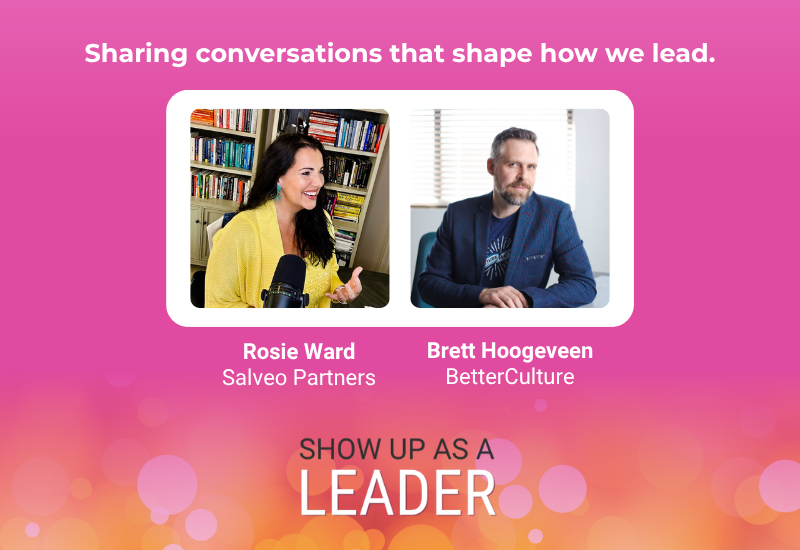
There is a moment in my podcast conversation with Brett Hoogeveen, CSP, Co-Founder of BetterCulture, that made us cringe. Because culture is still a debate in too many organizations.
What made us cringe? Hearing someone refer to workplace culture as “fluff.”
Fluff.
Let’s be clear: culture is not fluff. It’s the invisible system shaping everything: your results, your retention, your leadership effectiveness, and yes… your quality of life at work.
According to SHRM’s 2026 State of the Workplace Report, prioritizing employee experience is one of the top priorities for organizations seeking long-term success.
Here’s the reality: Employee experience is culture.
And culture is anything but fluff.
So why are some of us still treating culture as an optional side project rather than recognizing it as the strategic driver that shapes outcomes?
Culture Is What People Experience and What They Expect
Brett and I come at this work from slightly different angles, but we landed in the same place.
Brett defines culture as:
“The attitudes and behaviors that a group of people comes to expect from one another.”
I often describe culture as the underlying current: the beliefs, mindsets, and norms that shape how work actually feels day to day.
Different language. Same truth:
👉 Culture is what people experience. And over time, it becomes what they expect.
- Do people expect to be valued or overlooked?
- Do they expect trust or micromanagement?
- Do they expect consistency or unpredictability?
That expectation is your culture.
The Leadership Trap: Thinking Culture Lives “Out There”
One of the biggest myths we see in organizations is the idea that culture is owned by:
- The CEO
- HR
- Leadership
Yes, leadership influence matters significantly.
But it’s not just about leadership. Here’s where Brett and I strongly align:
Culture can be shaped top-down and bottom-up, but never by opting out.
At Salveo Partners, we talk about this as:
- Culture contributors vs.
- Culture contaminators
Every person, in every role, is one or the other.
Which means culture doesn’t live in a strategy deck. It lives in how people show up every single day.
Why Good Intentions Don’t Translate Into Great Cultures
Here’s where most organizations fall short.
They care. They have values. They talk about culture.
And yet… the employee experience doesn’t match.
Why?
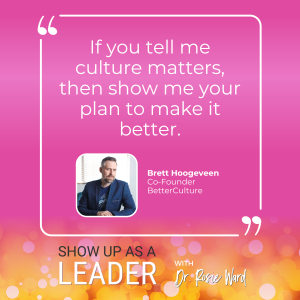
Because culture isn’t shaped by intention. It’s shaped by consistency and systems.
Brett said it plainly:
“There isn’t a magic pill; the magic is showing up consistently and intentionally every day.”
And I would add:
Even the most well-intentioned leaders will fall back into old habits without systems to reinforce what matters.
That’s why thriving cultures are not accidental.
They are:
- Designed
- Reinforced
- Measured
- And sustained through deliberate practices
When Values Become a “Con Job”
Let’s talk about something many organizations don’t want to admit.
Most have values.
Very few operationalize them.
Brett calls this the “core values con job.”
Because if you can’t answer this question: Are your people living your values more today than they were a year ago?
Then your values aren’t shaping behavior.
They’re branding.
At Salveo Partners, we see this play out all the time:
New employees join, excited by what they are promised… only to quickly realize that the lived experience doesn’t match the promises.
That gap between stated culture and actual experience is where trust erodes.
And where retention risk begins.
Culture Work Is Not a Program. It’s a System.
One of the most practical parts of Brett’s approach is breaking culture into tangible areas:
- Executive alignment
- People systems (hiring, performance, rewards)
- Manager capability
- Emerging leaders
- Everyday employee experience
We see the same pattern:
Culture shows up in every system that touches people.
- How you hire
- How you onboard
- How you give feedback
- How you recognize
- How you hold people accountable
If those systems aren’t aligned with your desired culture, your culture will suffer every time.
The Throughline: Culture Is the Employee Experience
This is where the SHRM data matters.
If employee experience is a top priority for long-term success, then culture cannot be an afterthought.
Because:
👉 Culture IS the employee experience.
Not the perks. Not the slogans. Not the occasional initiative.
But the day-to-day reality of working in your organization.
A Simple (But Not Easy) Leadership Standard
So what does it actually mean to show up as a leader?
From Brett’s perspective, it’s about responsibility:
- Build pride
- Help people succeed
- Address conflict
- Make work better
- Protect your team from toxic behavior
From my perspective, it’s about alignment:
- Align your intent with your impact
- Align your values with your behaviors
- Align your systems with your desired culture
Different lenses. Same expectation:
👉 Leadership is about shaping the experience people have at work.
The Question Most Organizations Aren’t Asking
If culture is what employees experience and expect…
Then here’s the question that matters most:
How closely does your current culture match the experience your employees actually want and need to thrive?
Because the gap between those two things?
That’s where:
- Disengagement lives
- Turnover begins
- And performance suffers
One Challenge for You
If you take nothing else from this conversation, take this:
Stop waiting for culture to improve, and start contributing to it.
Ask yourself:
- What do people expect when they interact with me?
- Am I reinforcing the culture I say I want?
- What system could I put in place to be more consistent?
Because culture doesn’t change with intention.
It changes with behavior that is repeated over time.
Want to Go Deeper?
If you’ve ever felt like culture is too abstract to fix or too big to influence, this episode will change your perspective. Tune in for more insights into workplace culture, tangible tools, and how to become the place where everyone wants to work.
A Clear Next Step
If you want to understand how your workplace culture is truly showing up, not just what you intend, but what employees actually experience, here are two great places to start. Measure your culture in one of two ways:
- Salveo Partners’ Thriving Workplace Culture Survey™ (TWCS) captures and measures the gap between your employees’ perception of the current culture and their desired culture—giving you clear, actionable insight into where your organization is and where to focus next.
- Workplace Assessments provide a more individualized, tailored approach to understanding what is actually happening beneath the surface. Via structured interviews, you will gain deeper insight into what is and isn’t serving you well and where to focus your efforts.
Because thriving cultures don’t happen by accident.
They’re built intentionally, consistently, and with clarity.
👉 If you’re ready to understand your workplace culture at that level, learn more here and schedule a culture call with me.
Stay brave. Stay human. Stay safe. And never dull your sparkle!
Rosie
