
What would become possible if we stopped treating people and performance as competing priorities?
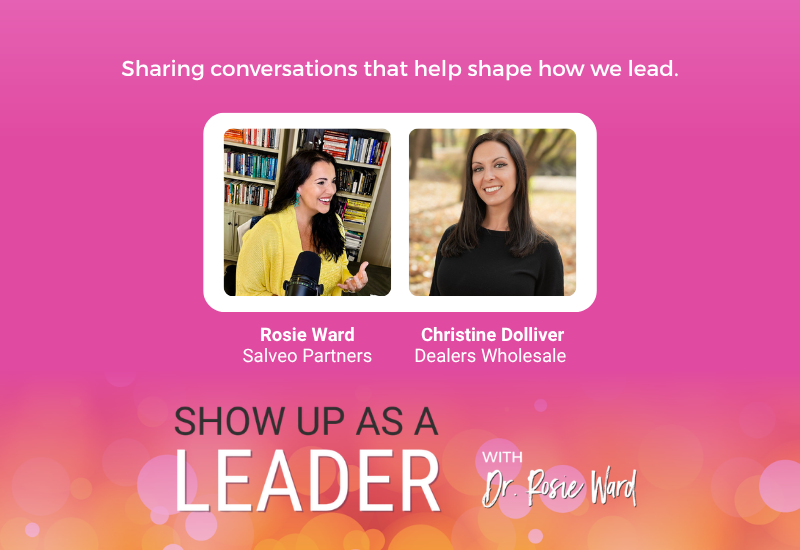
That question stayed with me after my podcast interview with Christine Dolliver, SHRM-CP, Director of People Strategy at Dealers Wholesale.
Dealers Wholesale operates in the construction industry, which is an environment that is not always the first place people look for examples of vulnerability, human-centered leadership, or intentional culture development.
And yet, they are demonstrating what happens when an organization stops dismissing the “people stuff” as soft and starts treating it as an important business strategy.
Their experience reinforces something I believe deeply:
You do not have to choose between being people-focused and results-focused.
In fact, the two are inseparable.
Leadership is Not About a Title
One of the first things Christine shared was how Dealers Wholesale defines leadership.
If you personify the company’s core values, advance its vision, positively influence others, and create accountability through your own performance… you are a leader.
No formal title required.
Cue the happy dance because she was absolutely speaking my love language.
Leadership has never been, and never will be, simply about a title, position, or place on an organizational chart.
Leadership is about impact.
It is about how you show up, how you influence the people around you, and whether your actions help others grow.
But for that definition to mean anything, an organization must have clarity around its purpose, vision, and values. Those values cannot merely live on a website, hang on a wall, or appear in an employee handbook.
They must be operationalized.
People need to understand how the values show up in their everyday decisions, behaviors, conversations, and relationships. Otherwise, they are just slogans.
Investing in Leaders Is a Culture Strategy
Dealers Wholesale established an ambitious goal: to become one of the fastest-growing companies in its industry while achieving 90 percent employee retention across all its operations.
At the time of our conversation, its trailing twelve-month retention rate was already approximately 88 percent—remarkable progress in an industry where 60 percent retention can be considered normal.
One of the most significant actions the company took was investing deeply and intentionally in its leaders.
They created a yearlong leadership curriculum covering foundational management practices, team effectiveness, career conversations, accountability, and crucial conversations. They made the initial program mandatory because they knew development would otherwise be one of the first things pushed aside when business got busy.
And guess what?
The business did get busy.
During the same period, the company generated more revenue than in any previous year of its sixty-year history. It also maintained strong results in quality, on-time delivery, and customer approval.
That matters.
Too often, organizations say:
“We don’t have time for leadership development right now.”
“We need to focus on the business.”
“Our leaders are too busy.”
But developing your leaders is focusing on the business.
Christine shared that some of the most meaningful feedback was not simply that participants enjoyed the content. It was that senior leadership had promised to invest in them—and followed through.
That consistency communicated something powerful:
You matter. We see you. We believe you are worth developing.
When leaders feel acknowledged, supported, and equipped, they are more likely to create that same experience for their teams.
That is how good workplace culture spreads.
Your Best Technician May Not Yet Be Equipped to Lead People
Organizations frequently promote their best installer, salesperson, technician, clinician, operator, or subject-matter expert into management.
Then we act surprised when they struggle.
Being excellent at the work does not automatically prepare someone to lead the people doing the work.
Formal people leadership requires a fundamentally different skill set. Leaders must learn how to establish clarity, create accountability, coach performance, hold difficult conversations, manage their own reactivity, develop others, and care for both performance and well-being.
Without that support, frontline and middle managers often become caught between the expectations of senior leadership and the needs of their employees.
They feel like punching bags.
They become overloaded, disconnected, and burned out.
And when a manager is operating from stress, self-protection, or exhaustion, that experience inevitably spills onto the team.
Putting resources into supporting and developing these leaders is not a nice gesture. It is one of the most direct ways to influence retention, engagement, psychological safety, customer outcomes, and organizational performance.
Culture May Start at the Top, but It Is Experienced Locally
Senior leaders set the atmosphere for workplace culture. Christine sets a good example at Dealers Wholesale by openly modeling vulnerability, admitting her own struggles, and being willing to work alongside employees.
That example matters a great deal.
But we must remember that culture is mostly experienced at the local team level.
An employee’s interactions with direct supervisors, managers, colleagues, and informal leaders are where culture is really experienced.
The routine interactions reinforce an employee’s beliefs about whether:
- Company values are real.
- It is safe to speak up.
- Mistakes can become learning opportunities.
- People are really valued.
- Leaders can be trusted.
- The organization’s culture is lived or merely promoted.
That is why authentic leadership at the top is not enough. Organizations must equip leaders at every level to translate the desired culture into a consistent employee experience.
Growth Cannot Come at the Expense of Humanity
I was also struck by how intentionally Dealers Wholesale approaches acquisitions.
Before pursuing an acquisition, leaders evaluate cultural compatibility—not only the financial opportunity. They ask whether the company’s leaders and everyday practices match the values Dealers Wholesale has worked so hard to establish.
They are willing to walk away when the cultural alignment is not there.
And after an acquisition, they do not simply send policies and benefit documents from a distant corporate office.
Christine meets with employees personally. She explains what is changing, answers questions, builds relationships, learns about their lives, and brings new leaders and emerging leaders into the same development processes offered throughout the organization.
That is what human-centered integration looks like.
It is not about forcing everyone into a new corporate mold. It is about honoring what is already working, building trust, creating inclusion, and thoughtfully adding support.
Mergers and acquisitions can unlock tremendous growth. They can also destroy trust, belonging, and a healthy culture when people are treated as numbers or obstacles to assimilation.
How you grow matters just as much as whether you grow.
Courage Means Having the Hard Conversations
At the end of our conversation, I asked Christine to identify one behavior leaders everywhere could practice to create more human workplaces.
Her response was direct:
Have the hard conversations.
Do not wait for an issue to resolve itself.
Do not allow resentment, confusion, or underperformance to build to critical mass.
And do not confuse caring for people with steering clear of discomfort.
Caring personally and challenging directly belong together.
Having a courageous conversation is not the opposite of being people-focused. When it is treated with clarity, curiosity, respect, and care, it is one of the most human things a leader can do.
One Challenge for You
Look at your calendar, budget, and leadership priorities.
Do they provide evidence that developing your people is truly important?
Identify one action you can take this week to better equip, support, or invest in the people who influence your employees’ everyday experience.
That might mean scheduling a feedback conversation, creating space for a manager’s development, clarifying expectations, recognizing an emerging leader, or simply asking someone what support would help them succeed.
Intentions do not shape culture. Consistent actions do.
Want to Go Deeper? Listen to the Full Episode
Listen to our full conversation to hear more about how Dealers Wholesale is developing leaders, strengthening retention, preparing emerging talent, and protecting culture through acquisitions.
🎧 Listen here.
A Clear Next Step
Your culture is already being shaped—whether you are shaping it intentionally or allowing daily habits, leadership gaps, and self-protective behaviors to shape it for you.
Salveo Partners helps organizations future-proof themselves by strengthening culture and equipping leaders and teams to navigate change and disruption with greater courage, clarity, and humanity.
Depending on your organization’s needs, that work may include:
- Culture assessment and transformation
- Leadership development programs
- Executive and leadership coaching
- Team effectiveness and courageous-conversation workshops
- Emerging-leader development
- Support for the cultural and human aspects of organizational change, growth, and integration
You do not have to choose between caring for your people and achieving meaningful results.
The courageous path is learning how to do both.

